
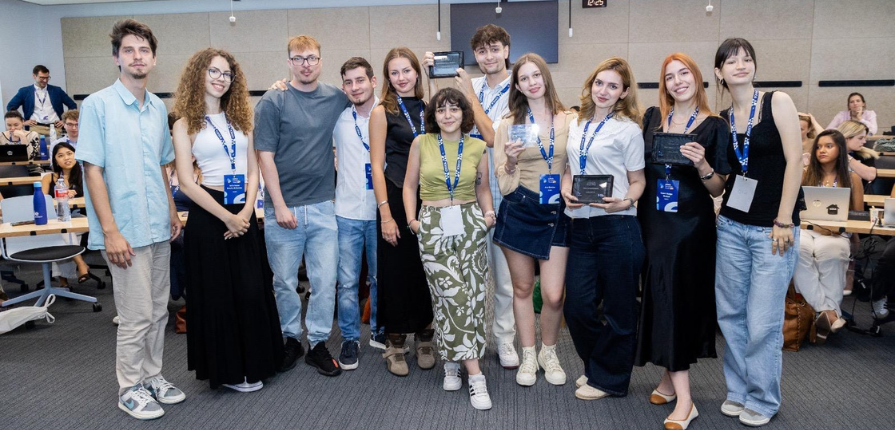
Between 22 and 26 June 2026, a team of undergraduate students from the National University of Political Studies and Public Administration (SNSPA) participated in CIVICA European Week 2026, hosted by IE University in Madrid. This year’s edition focused on “European Competitiveness”, addressing the challenges faced by the European Union in a rapidly changing global context, marked by technological transformation and increasing geostrategic competition.
The SNSPA team included Ana Bordea, Nicolae Tudor, Andrei Timofte, Carmen Șofronici, Horia Alecu, Sofia Enache-Brănescu, Mara Făcăleț, Eszter Brossai, Timea Mitulescu and Alexandru Sîngerean, accompanied by Ramona Cîrcu, PhD candidate in Political Science, who also served as mentor for one of the participating teams.
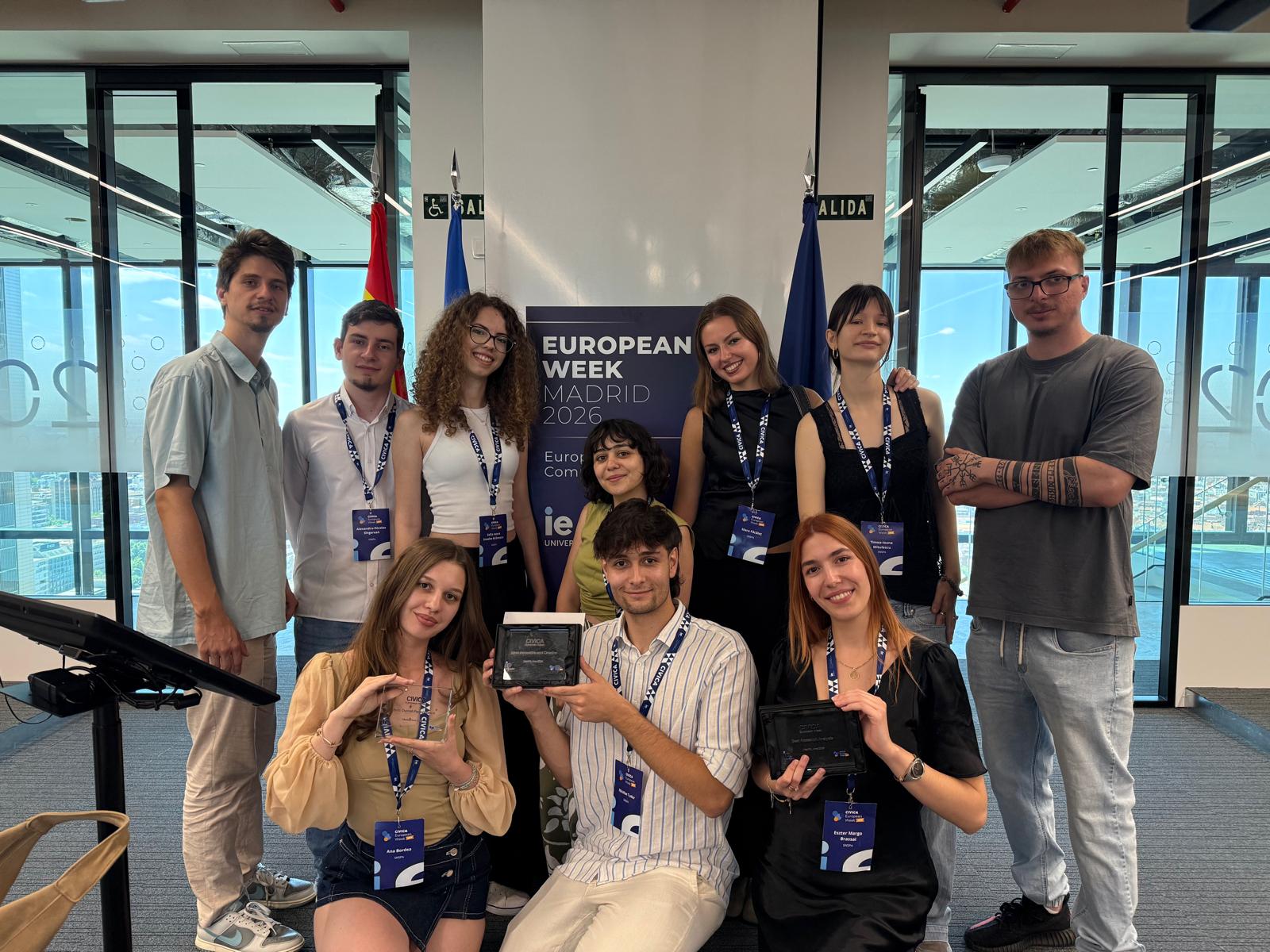
The SNSPA students, enrolled in the first and second years of undergraduate studies at the Faculty of Communication and Public Relations and the Faculty of Political Science, were actively involved in all the teams formed during the event, contributing to debates, collaborative activities and the development of public policy proposals on key issues for Europe’s future.
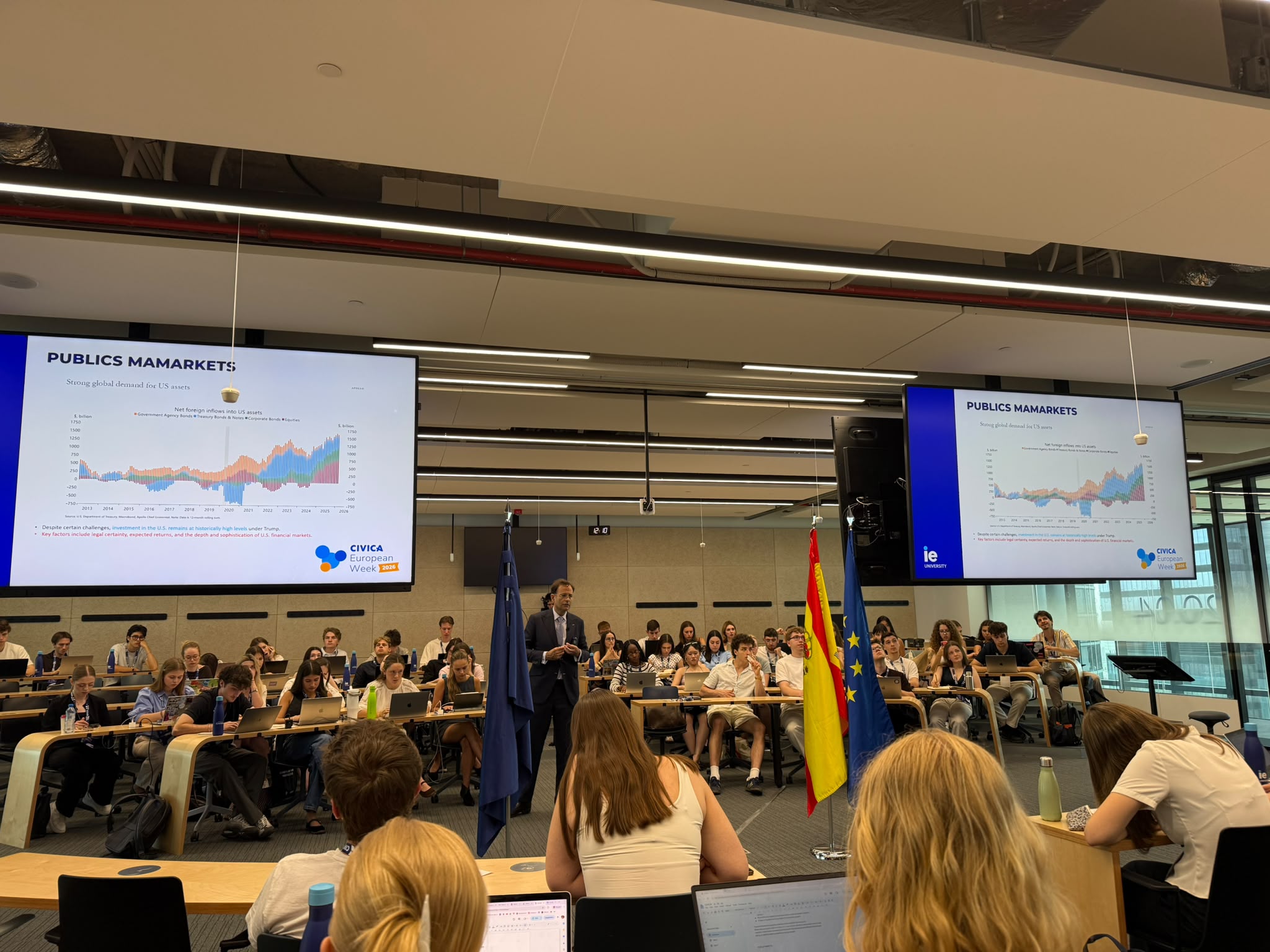
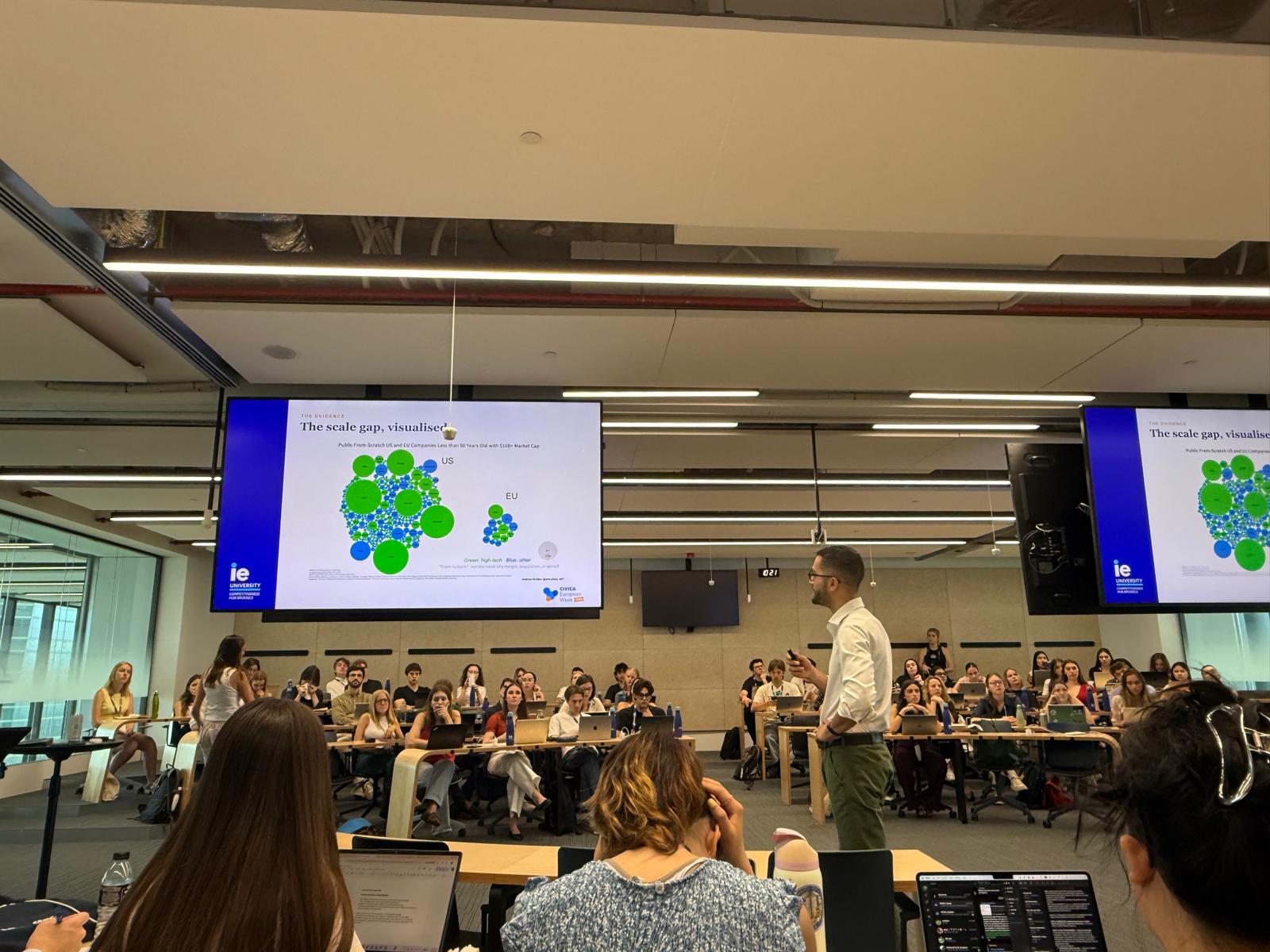
During CIVICA European Week 2026, participants took part in workshops on innovation and connectivity, sustainable energy and financial markets, visited the European Commission Representation in Madrid, joined an Interpol-style escape room activity, and worked in international teams to design specific policy solutions related to the main themes of the programme.
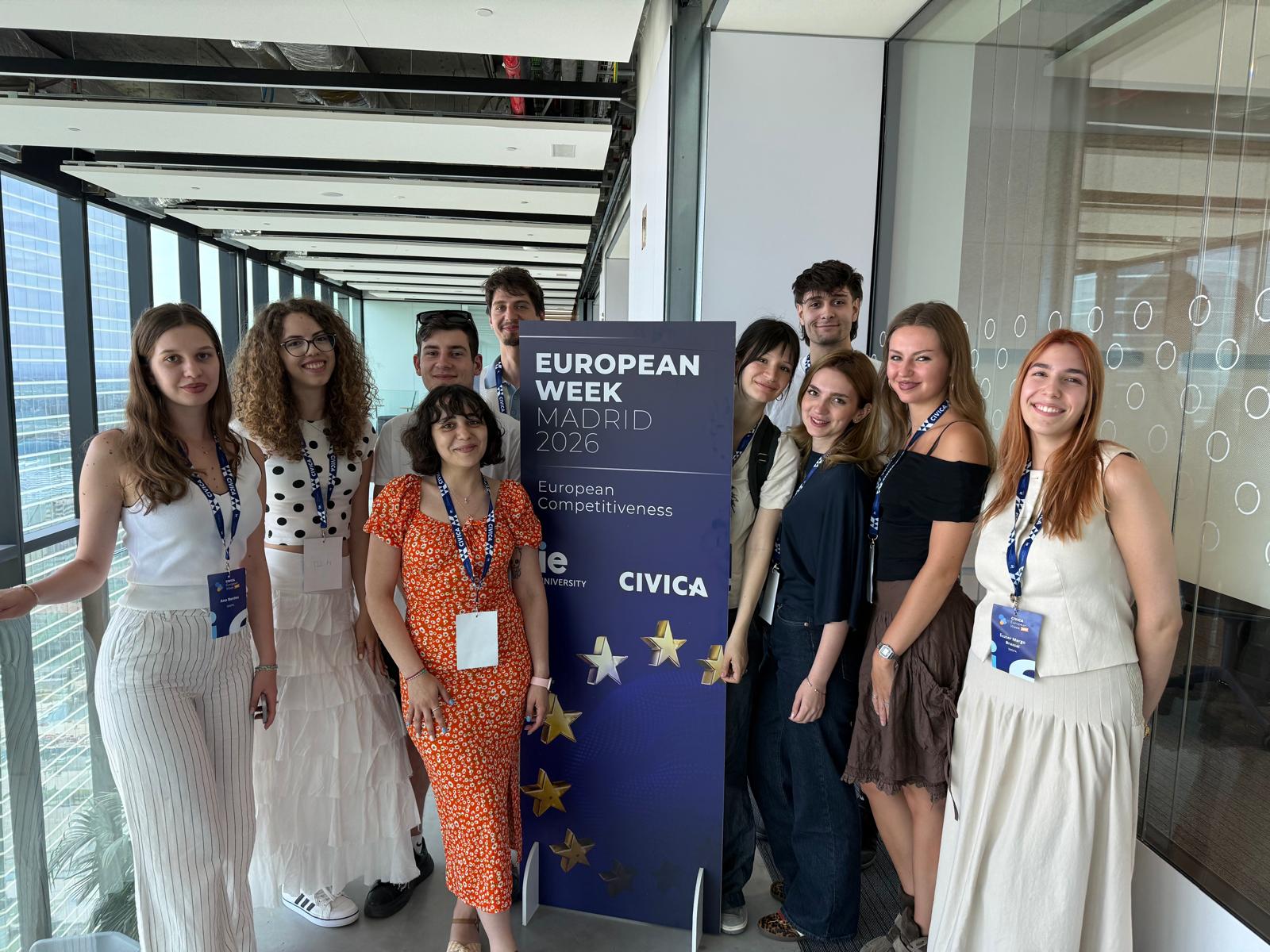
Ramona Cîrcu mentored one of the teams addressing the topic “How can Europe reduce its dependence on other regions of the world in terms of energy and sustainability?”, supporting students in developing their ideas and policy proposals in an interdisciplinary and collaborative academic setting.
CIVICA European Week is a week-long academic event dedicated to undergraduate students from across the CIVICA alliance. The programme encourages active student participation, interdisciplinary learning and civic engagement, offering participants the opportunity to work together on European policy challenges and to better understand the role of European institutions in strengthening Europe’s competitiveness.
The 2026 edition created a dynamic space for dialogue, cooperation and intercultural exchange. Over the course of the week, students built connections and friendships, developed new perspectives and contributed to inclusive working environments based on communication, teamwork and shared academic values.
Through its participation in CIVICA European Week 2026, SNSPA reaffirmed its commitment to supporting international learning experiences for students and to contributing to the development of a common European academic space, in line with the mission of CIVICA – The European University of Social Sciences.